San Rock Art at Dorschfontein Guest Farm
Digital Restoration Project
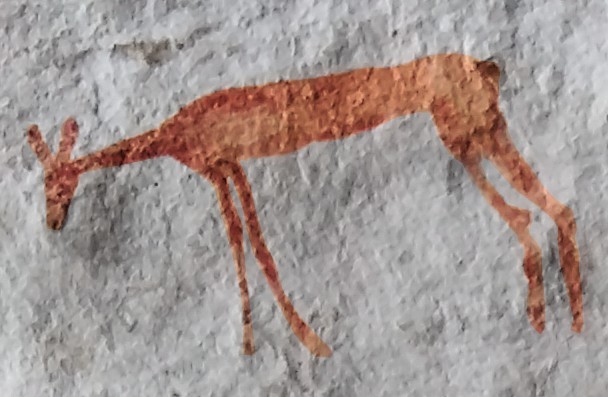
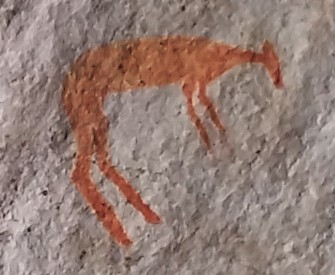
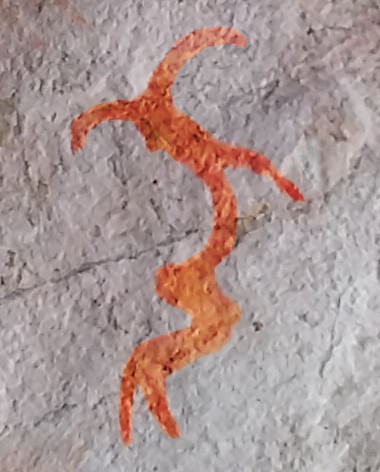
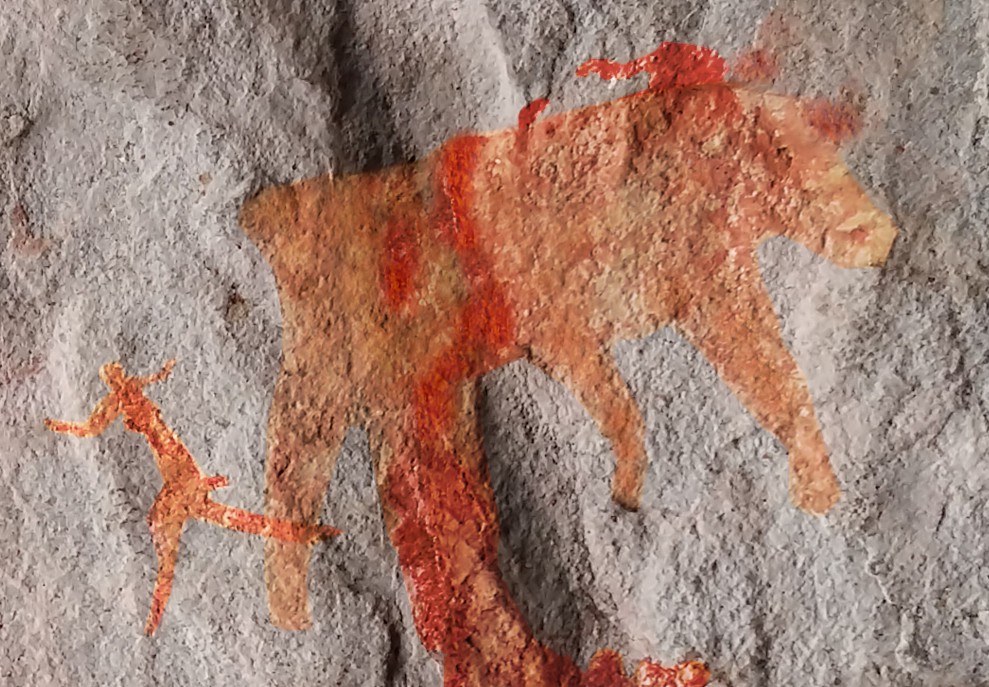
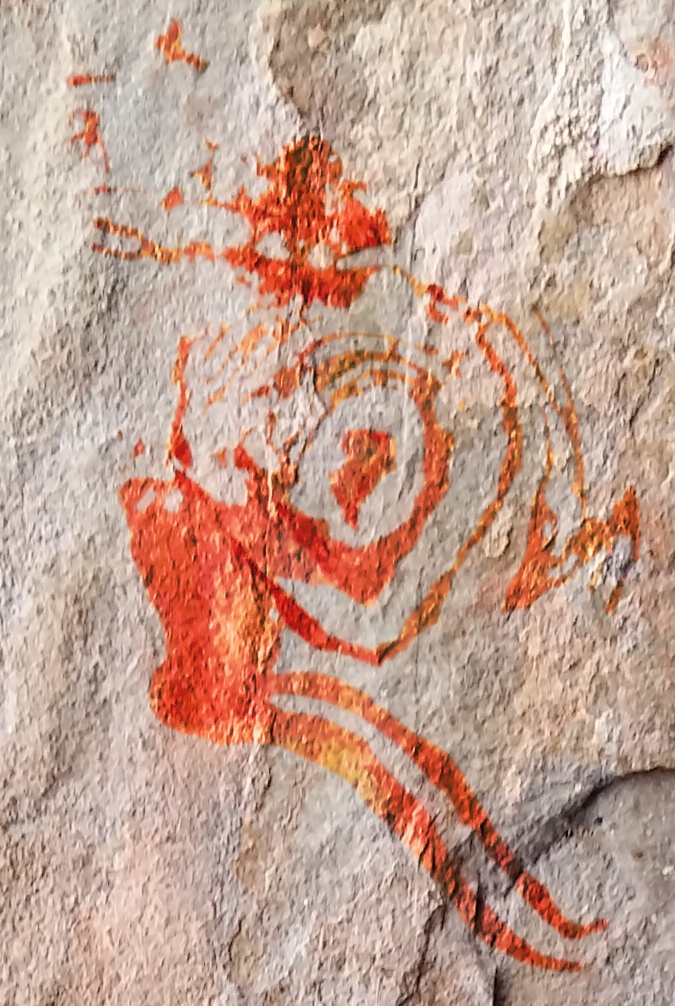
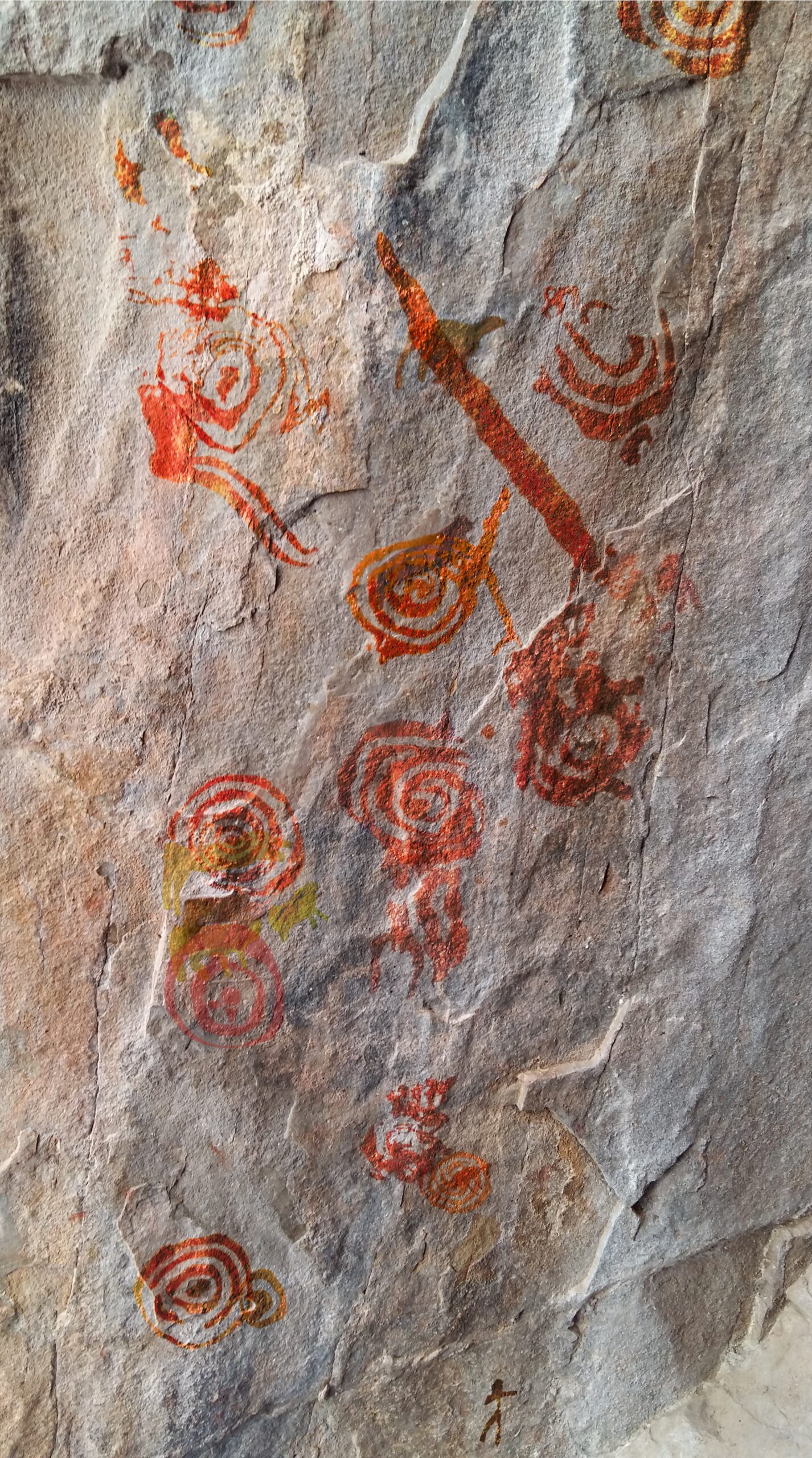
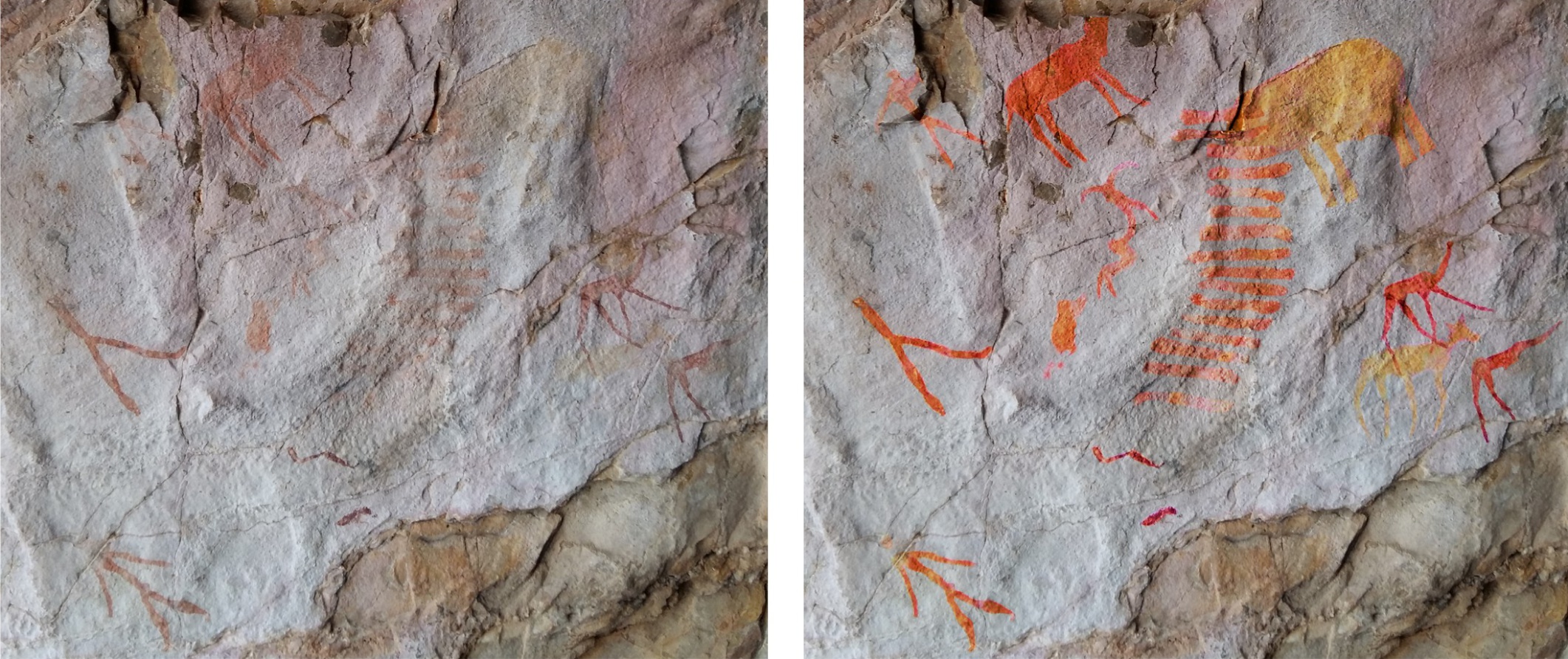
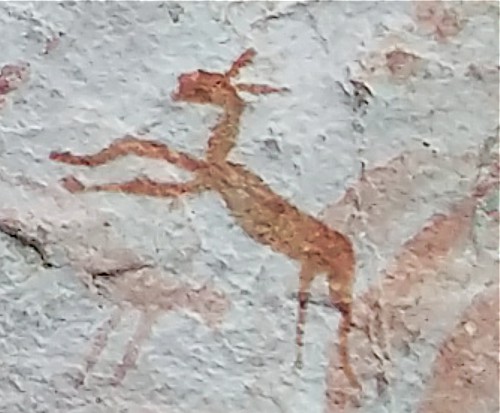
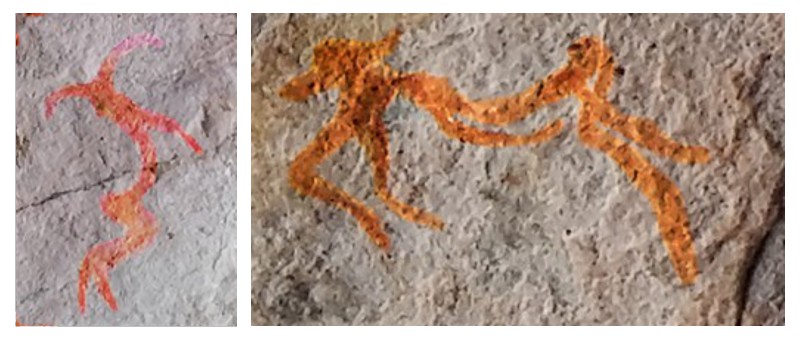
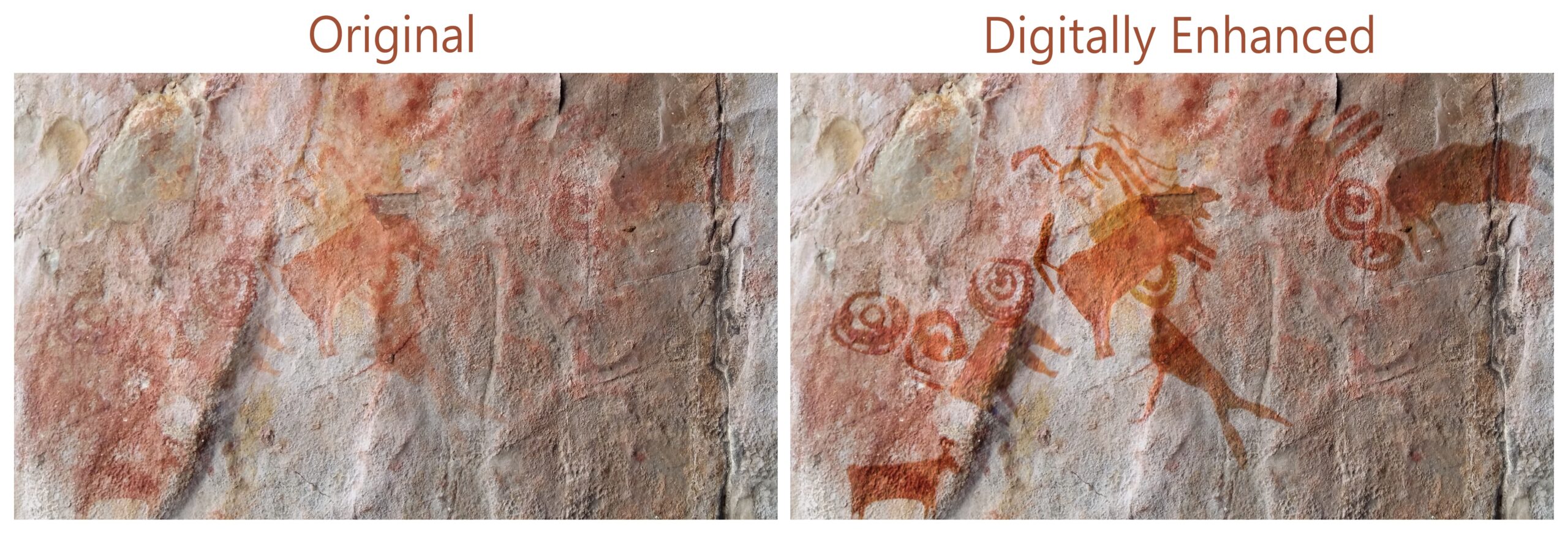
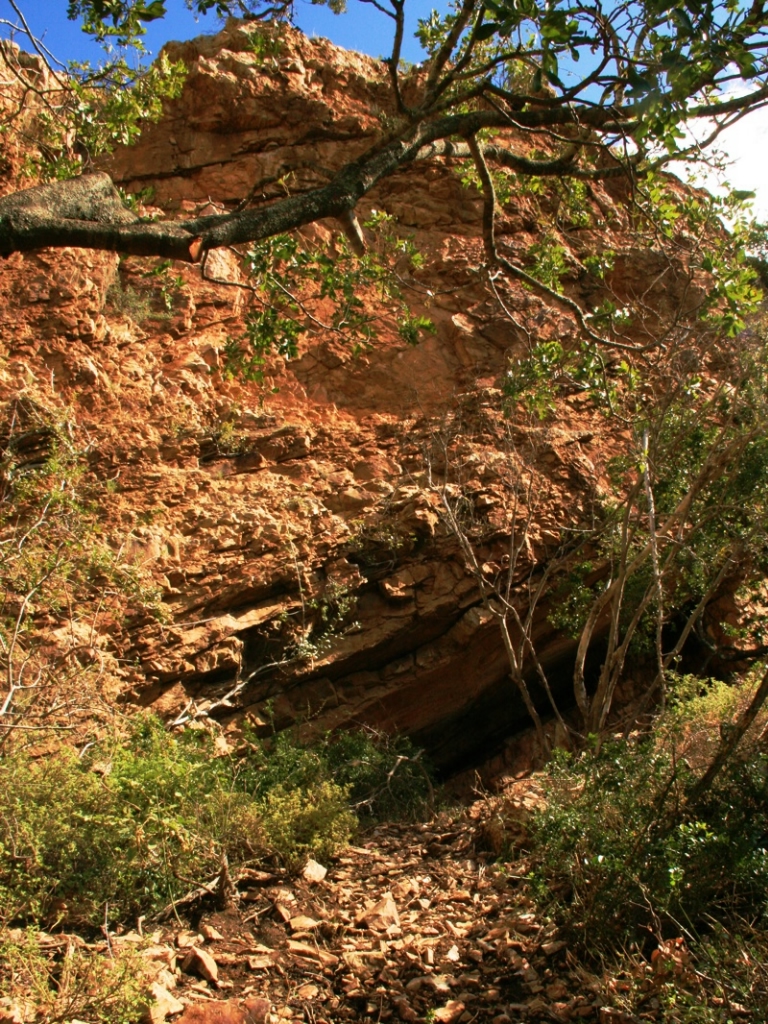
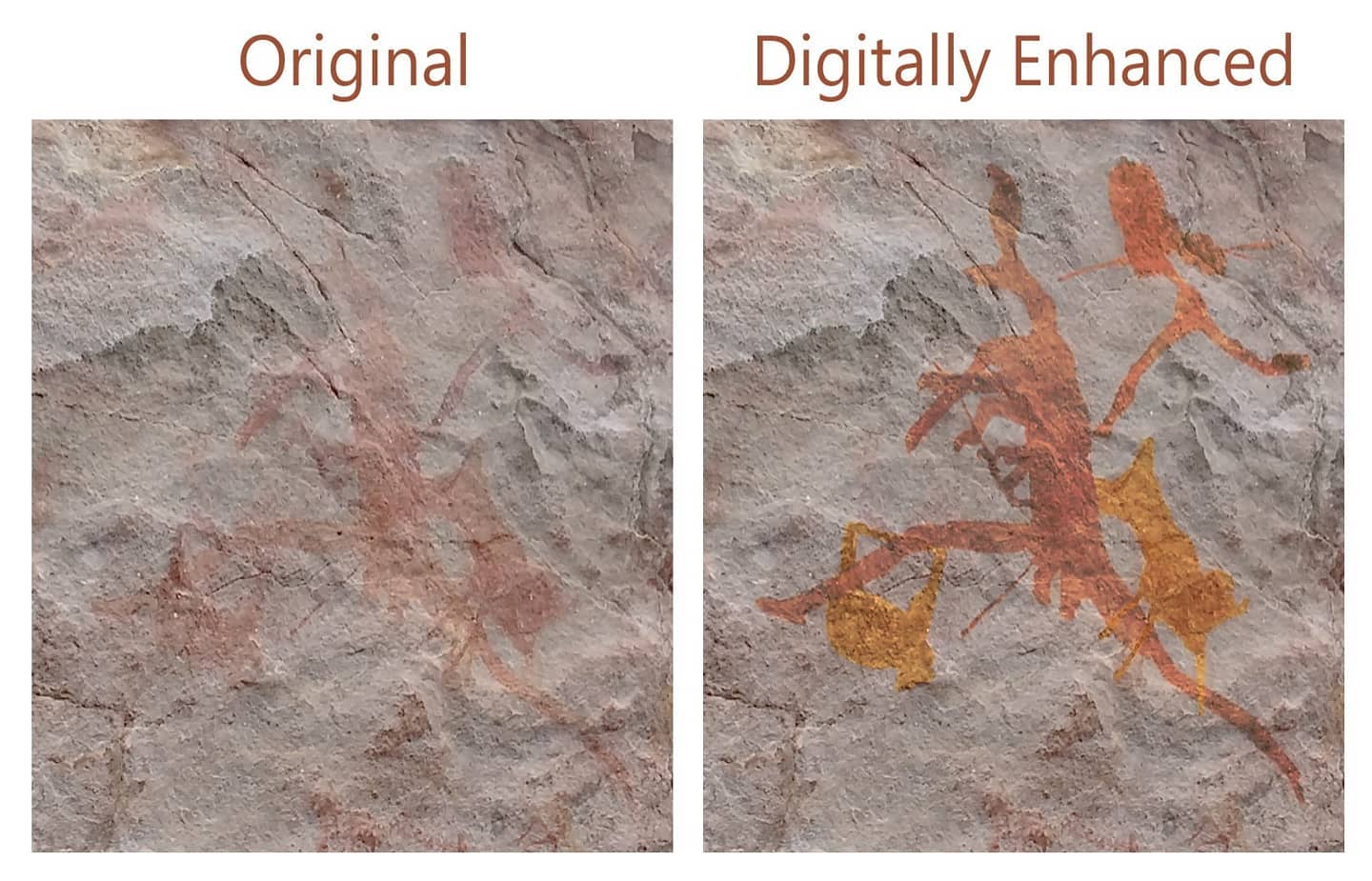
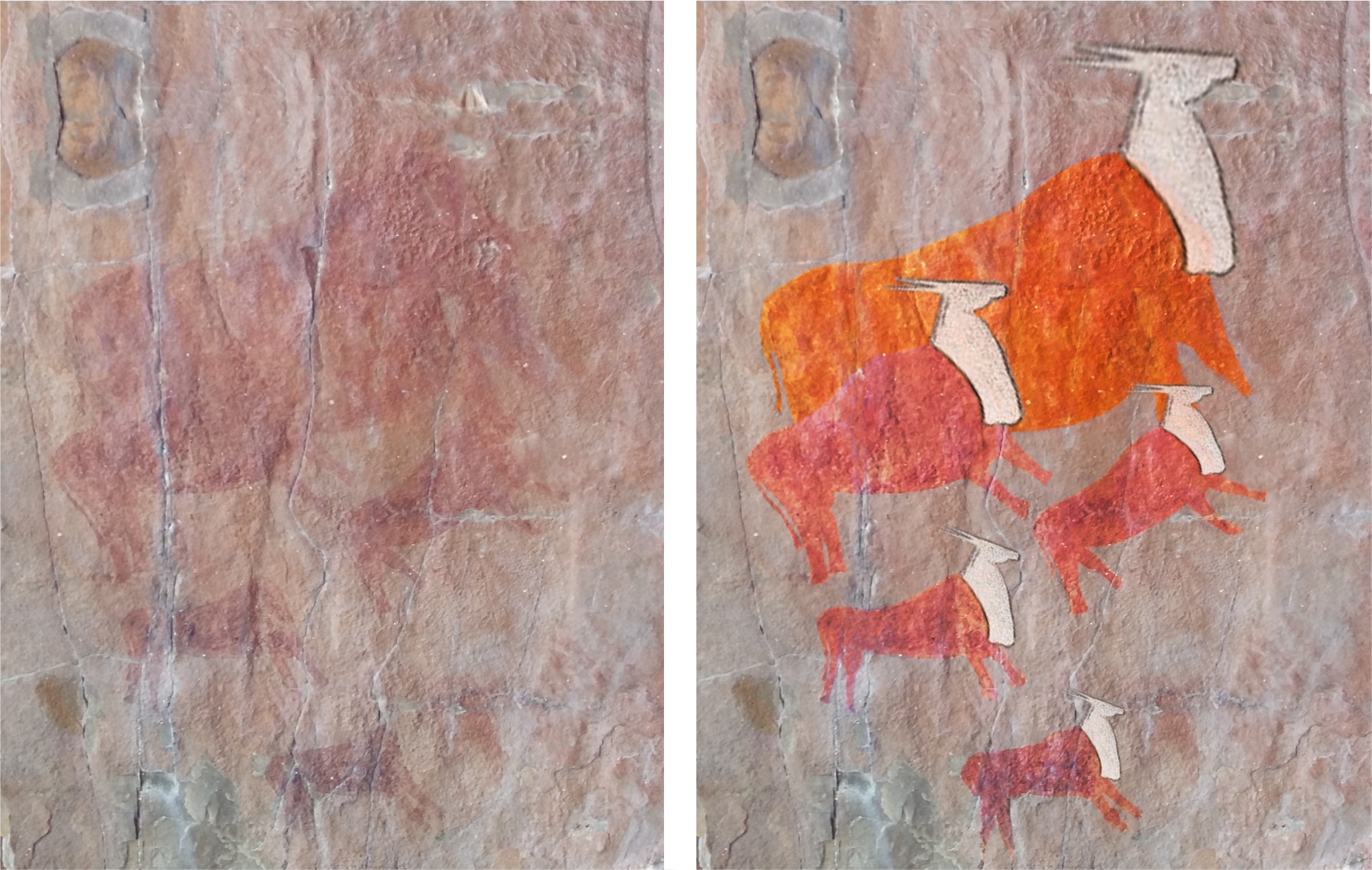
Dorschfontein Guest Farm near Steytlerville has some beautiful examples of San Bushman Rock Art. Natural calcification of the cave wall, and exposure to the elements has left some of the art faded. We’ve decided to digitally enhance them so we could try to understand them better. Please see these amazing Reconstructed images, alongside the original faded ones.
The story they tell is really quite spectacular. It is the story of the San way of life, of spiritual meaning and survival in a very tough environment, many hundreds of years ago. But how do we interpret these rock paintings? What do they mean?

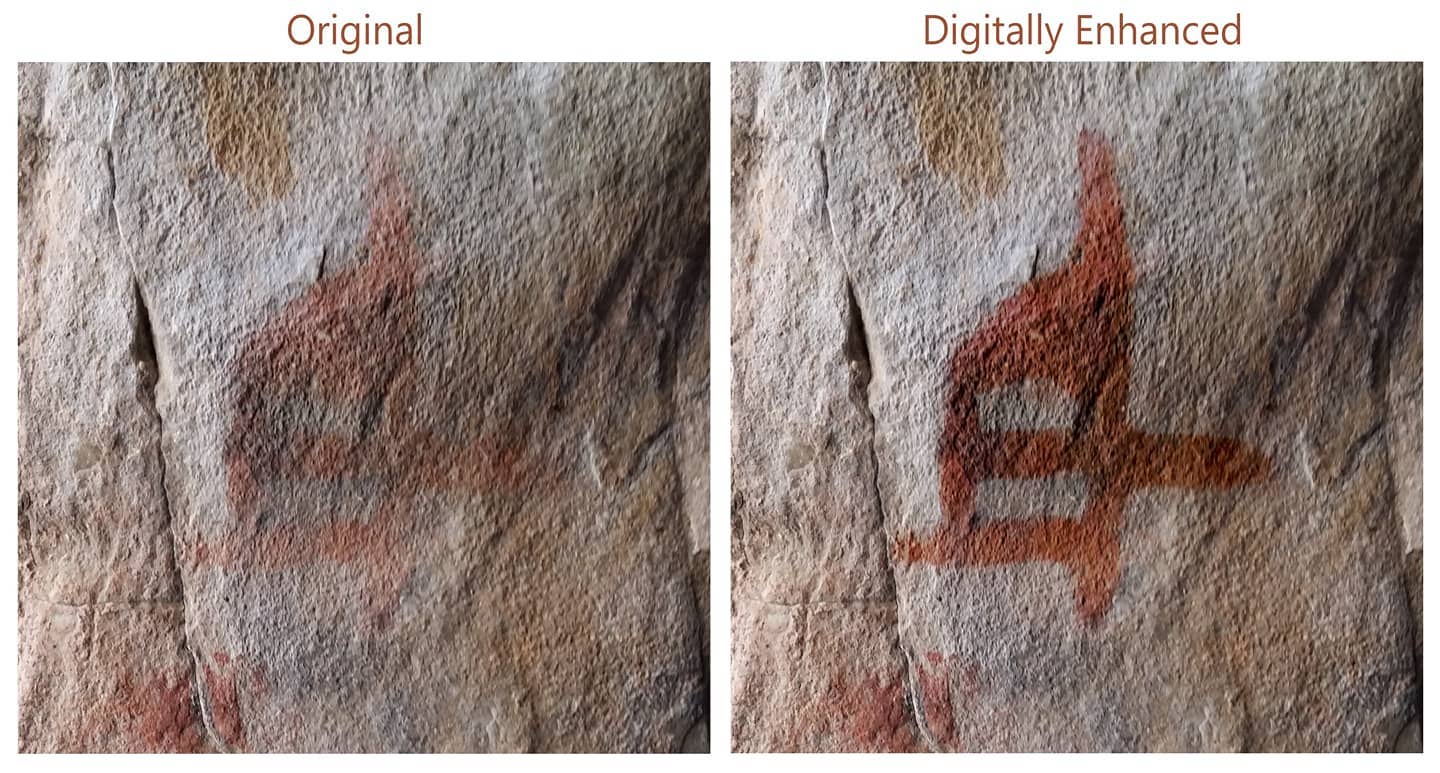
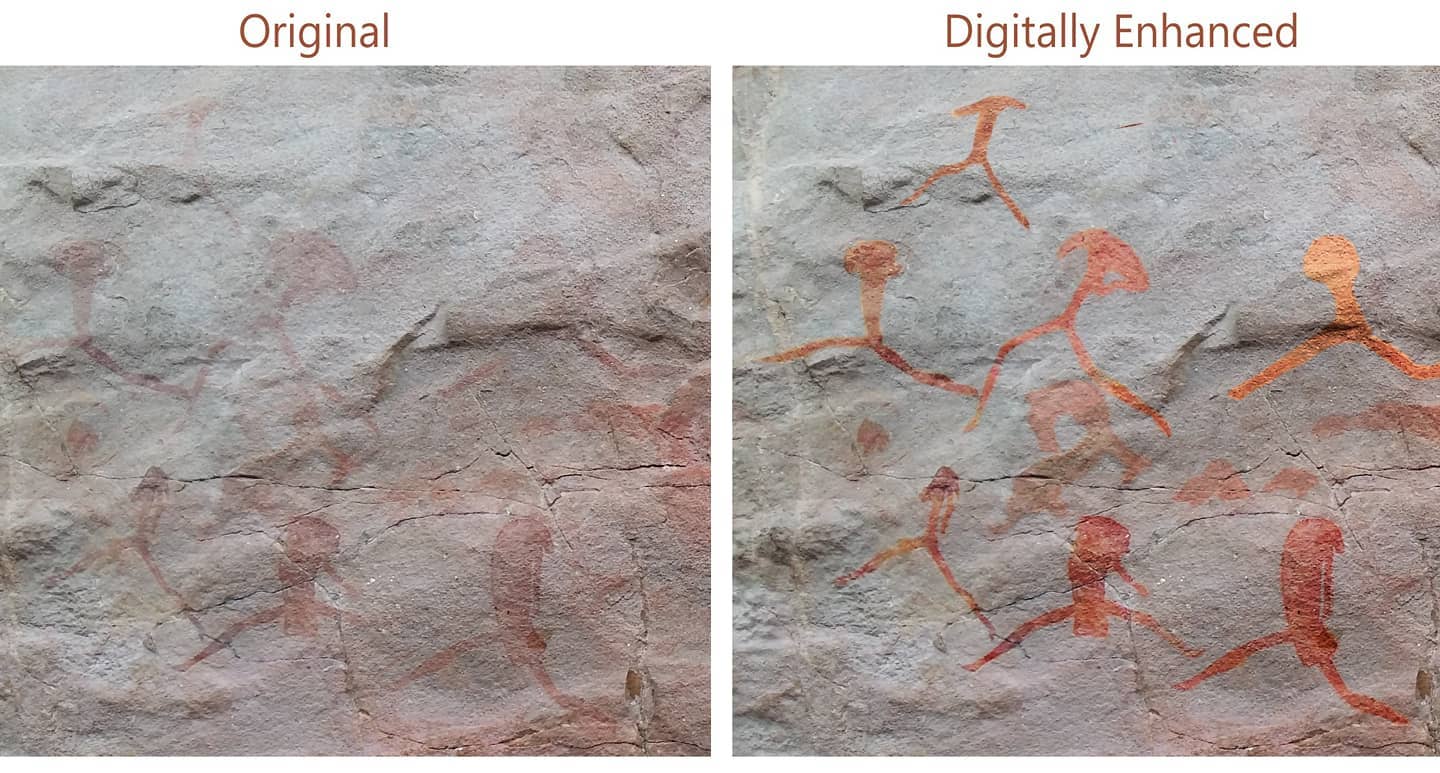

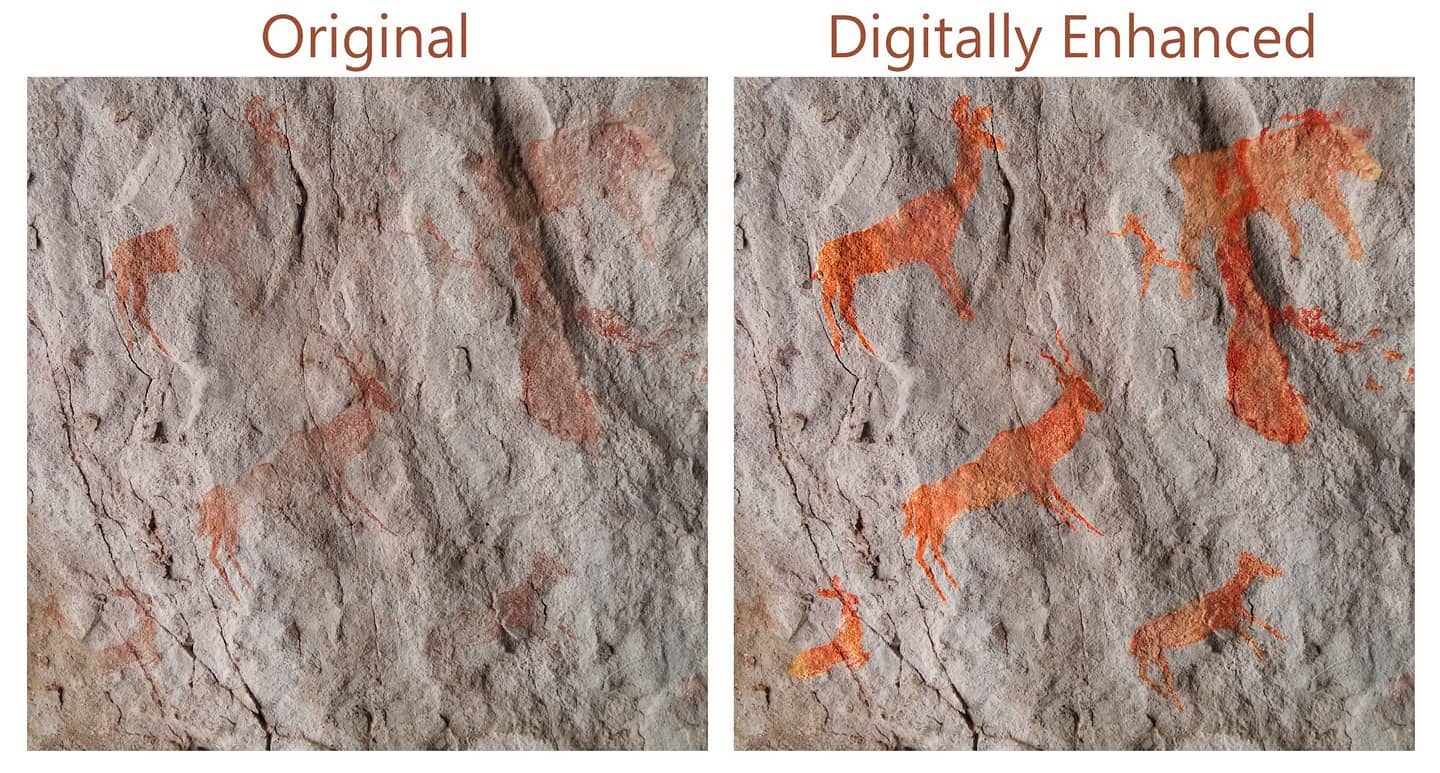
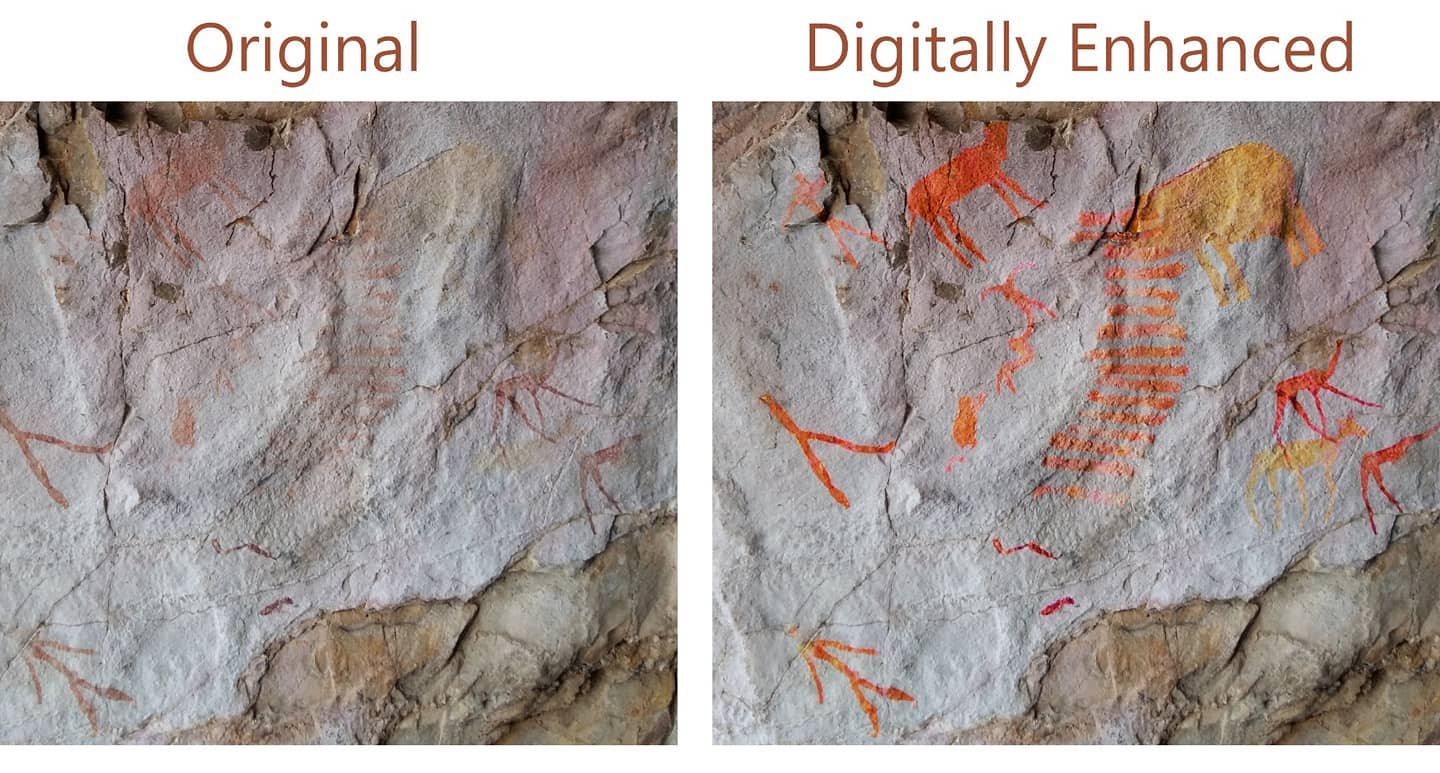
To fully understand the cave art, one has to first understand the culture and way of life of the San. These paintings were not made by random. Although the San were drawing animals and people they saw around them every day (therefor an art of observation) it is however rich with symbolism and spiritual meaning.
Dorschfontein is situated near a natural spring in the Karoo area inbetween Addo and the Baviaanskloof in the Eastern Cape, South Africa. The San were migratory hunter-gatherers that lived in the area for many thousands of years. Without proper testing it is difficult to estimate the exact age of the paintings. Some are older than others. A rough guess would be between 700 to 1500 years old.
Hunting was extremely important to the San, the energy-dense meat helping them survive the extremes of the Karoo. From living so intimately with nature, their amazing knowledge of the animals and the veldt allowed them to be better hunters. Using only primitive weapons, hunting in this way meant you have to get very close to the animal to be successful. A hunter had to be good at sneaking up on prey. Part of their technique was to “become the animal” they were busy hunting (this theme is also important during the Trance Dance ritual described later). The rhythm of a specific animal’s movement would be imitated during the chase, and along with the rhythmic breathing of the hunter would induce an euphoric trance-like feeling, helping them run vast distances while tiring out eland, kudu or springbok prey. It helped them to track the animal better, and anticipate it’s behaviour.
The Trance Dance was done during certain ceremonies, like “rain making”, or during the healing of a sick clan member. The shaman would dance continuously for hours. Through the monotony of the beat and hyperventilation they would be able to enter a deep trance state. It
would be intense, and the shaman would feel like they temporarily died and visited the spirit world. Trance induced hallucinations would often include visions of them transforming to specific animals. Elongated eland or springbok limbs were painted in a similar surreal,
distorted way they were experiencing reality during ceremonial trance state.


It is also important to note that not all San bushmen were allowed to paint rocks. The cave site was considered holy, and only the spiritual leader (or shaman) would paint, using a mixture of eland blood, ochre and clays. The art work was used to communicate their visions of the spiritual world to other members of their clan. The shaman saw the rock face as a doorway to this spiritual world, and he would sometimes begin by placing his hand on the rock to get in touch with the “other side”. He would then start to paint the hallucinations he experienced during the trance dance. These are the stories the San art tells us. They are the tales of the magical “vision journeys” the shaman undertook. These stories helped newer generations visually understand the san philosophy, and helped them to hunt better and survive the elements.
What Happened to the Eland Heads at Dorschfontein Bushman Caves?
The San used mixture of clay, ocre and blood to paint the bodies of the eland. This takes hundreds if not thousands of years to dissapear from the rock face. For the heads they used different ingredients, like bird droppings and plant saps, and this eroded much faster. That is why only the bodies of the eland remained visible.
The Eland has great significance to the San people. It is a huge animal, and it is difficult to hunt. Killing an eland would have meant large amounts of food for the tribe. Notoriously bad tempered, an eland could kill lesser hunters. Mythically, the eland was a connecting element. Through using this “power animal” the shaman could connect to the underworld to heal. The Eland is also symbolic of rain.
References:
https://www.wits.ac.za/…/about…/rock-art-of-southern-africa/
http://www.bradshawfoundation.com/rari/index.php
https://www.kaggakamma.co.za/blog/?p=183